How to Compare WordPress Website Development Quotes
Strumark blog

Ljubo Struharik
Article author
AI Article Summary
Compare WordPress website development quotes by the scope of work, not just the price. Get a written explanation of which pages and features are included, who prepares the copy and images, what SEO covers, and how revisions are charged. Check timelines, communication, post-launch support, maintenance and licensing costs, and who controls the domain, hosting, and website.
Strumark publishes its packages and offers fixed pricing for the agreed project scope. Content creation, technical and on-page SEO, and revisions within that scope are included, without hourly billing. Before accepting a quote, make sure you understand what you’re getting, what you’re responsible for, and what the finished website will cost.
The best way to compare WordPress website development quotes is to get a written explanation from each agency of exactly what’s included, who creates the content, what SEO covers, how revisions are handled, and what you’ll pay after launch. Price becomes a useful comparison only when you’re looking at the same scope of work.
A good part of our work at Strumark involves talking with prospective clients, answering inquiries, and preparing website proposals. We speak with people starting a business, growing an existing company, showcasing their professional work, or building a website for a personal project.
We know most of them aren’t talking only to us. They’re researching agencies, reviewing previous work, and requesting quotes from several companies to find a reliable, responsible partner. Naturally, they want to know what their website will cost and what they’ll get for their money.
So it might seem interesting that an agency is writing about how to compare other agencies’ quotes.
To us, it makes sense. The better a client understands the proposal, the easier it is to agree on the work and avoid unpleasant surprises along the way. You can apply these same criteria to a proposal from Strumark.
Why Isn't Comparing Website Prices Enough?
Because “WordPress website development” doesn’t mean the same thing at every agency.
One quote might cover setting up the design and adding copy and photos you provide. Another might include researching your business, planning the pages, writing the copy, selecting images, designing and building the website, and preparing it for search engines.
Both proposals can have the same title. What you receive can be very different.
Imagine two quotes for a business website. One costs less upfront but requires you to supply all the content, charges separately for SEO, and bills revisions by the hour. The other has a higher starting price but includes content, SEO, and revisions within the agreed project scope.
The first option may work well if you already have all the materials and someone to handle the remaining work. If you don’t, that starting price doesn’t tell you what the finished website will actually cost.
The lowest quoted price doesn’t always mean the lowest cost to launch. Likewise, the most expensive proposal isn’t automatically the best. What matters is what the price includes.
Give Each Agency the Same Project Brief
To receive comparable quotes, give each agency roughly the same information.
You don’t need to know technical terms or plan every page in advance. Explain what you do, who the website is for, and what you want visitors to do when they arrive.
Should they call you, send an inquiry, book an appointment, explore your portfolio, or buy a product? Those goals shape the website’s structure and features.
Your initial inquiry should explain:
- What you do and who you serve
- Whether you’re building a new website or replacing an existing one
- Which services or products you want to present
- Whether you need a blog, online store, booking system, or multiple languages
- Whether you have copy, photos, and a logo
- Whether you already have a domain and hosting
- When you’d like the website to be completed
If you don’t know how many pages you need, say so. Recommending a suitable structure is part of the agency’s job.
Problems arise when one agency receives a request for a simple informational website, while another learns during a conversation that you also need copywriting, two languages, and a booking system. Their prices won’t tell you much about which agency offers better value, because they’re quoting different projects.
What Should You Get in Writing?
A proposal should explain what will be done, at what price, and under what conditions.
“Development of a modern, responsive, SEO-optimized website” sounds good, but leaves too much room for interpretation.
Ask for a clear description of the website’s structure and scope, features, content responsibilities, SEO work, timeline, payment terms, and revision policy. For an online store, also clarify how many products will be added, which payment and shipping options will be configured, and whether integrations with other systems are included.
What’s excluded matters too. The domain, hosting, licenses, additional languages, new product uploads, and ongoing maintenance may be separate charges. That’s fine, as long as you know about them before accepting the proposal.
At Strumark, we publish our website development and maintenance pricing, with several SEO website packages and an online store add-on. These packages reflect what we actually deliver and cover most of the needs clients bring to us.
If a project requires something beyond that scope, we discuss it upfront and include it in the proposal.
Our proposal also serves as the agreement for the work: what’s listed should be delivered at the agreed price. That’s why we want it to be understandable even if you have no background in websites.

Who Prepares the Website Copy and Photos?
This is one of the most important points to compare, yet it often comes up only after development has started.
Content can bring a website project to a standstill. The client hasn’t written the copy, photos are scattered across different phones, service descriptions aren’t organized, and everyday business leaves little time to prepare everything.
The agency is waiting for materials. The client expects the agency to move forward. The project stalls.
Sometimes waiting is justified because certain information can only come from the client. The problem is when responsibilities weren’t clearly defined at the start, and “we’re waiting for your content” becomes the answer every time the client asks when the website will be finished.
Ask a specific question:
Does the price include writing the copy and sourcing images, or only adding materials I provide?
Those are different services.
How Does Strumark Handle Projects Without Existing Content?
Not having content ready isn’t a reason for us to delay a project.
If you don’t have copy or photos, we’ll prepare the materials. We’ll research your business and review your social media, posts, photos, short videos, and any existing sources that help us understand what you do.
Often, clients already have plenty of useful information. It just hasn’t been organized into website content.
If you don’t have social media content either, we’ll gather the basic information through a conversation and research your industry. We’ll look at how similar businesses present themselves, what customers ask, and what needs a clear explanation.
We then write original copy that reflects your business. Competitor research helps us understand the market; it isn’t a source of text to copy.
For images, we use premium stock services and, when appropriate, premium AI tools to create high-quality, realistic visuals. We select these images to suit the topic, while using authentic materials to show your actual work, premises, or team.
We still need you to confirm important details and check that we’ve described your services accurately. We don’t expect you to become a writer, photographer, and website editor before the project can begin.
When comparing quotes, also compare how much of your own time and work each option requires.
What Does “SEO Included” Actually Mean?
“SEO included” needs an explanation. Listing it as a benefit isn’t enough.
Ask what will actually be done. Will the page structure be planned around your services? Will headings and meta descriptions be written? Will indexing, internal links, mobile layouts, and technical issues be checked?
Installing an SEO plugin isn’t the same as optimizing a website. The plugin is a tool. Someone still needs to understand the content and use it properly.
At Strumark, technical and on-page SEO are part of website development. We plan this foundation alongside the content and structure, rather than bringing it up for the first time after the design is finished.
Other proposals may list SEO as a separate service. That isn’t necessarily a problem, but you should know what’s included in development and what costs extra.
Extensive SEO work or an ongoing engagement can cost as much as the website itself, or more. Comparing a one-time SEO setup with a long-term SEO strategy as if they were the same service won’t help you make a good decision.
An SEO foundation included in development isn’t a promise of a number-one Google ranking. Ongoing publishing, expanding topic coverage, tracking results, and further improvements are additional work that should be defined separately.
How Are Revisions and Additions Charged?
An initial quote may look affordable, while the final bill ends up significantly higher because of revision charges.
You might want to rearrange a section, expand a service description, replace images, or adjust the contact form. If every change is billed by the hour, a few rounds of revisions can noticeably increase the total.
Hourly billing isn’t a problem in itself. The problem is not knowing the rate, what counts as additional work, or whether you’ll receive an estimate before that work begins.
Before accepting a proposal, clarify:
- Which revisions during development are included
- Whether the number of revision rounds is limited
- What counts as refining the agreed work versus a new request
- How additional work is estimated and approved
- What rates apply to changes after the project is complete
At Strumark, our packages have fixed prices. While completing the agreed project, we don’t count hours or charge separately for the revisions and adjustments needed to reach the approved final version.
If the agreed work takes us longer, that doesn’t automatically mean a bigger bill for the client.
We do distinguish between finishing the agreed website and expanding the project. Adding an online store or a new booking system is different from editing a paragraph or rearranging a section. New functionality is discussed and agreed on in advance.
The price in your accepted proposal is what you’ll pay for that scope of work.

What Does a Website Cost After Launch?
Development isn’t the only cost you should understand.
There are domain renewals, hosting, possible licensing fees, and maintenance. Later, you may want new pages, additional products, or new features.
Ask for a breakdown of first-year costs and an explanation of what renews in following years.
Pay particular attention to premium plugins. If a feature relies on a license provided by the agency, find out what happens to updates and support if you switch providers later.
Do You Have to Use the Same Agency for Maintenance?
Clarify this before starting the project.
Under Strumark’s standard website development arrangement, you aren’t required to hire us for WordPress maintenance. We publish our maintenance packages, but you can choose another provider or arrange maintenance yourself. Special terms, such as installment payment arrangements, are defined in the individual proposal.
Having a choice of maintenance provider doesn’t mean the website needs no maintenance. Someone still needs to handle updates, backups, security, and checks of important features.
Maintenance and content updates aren’t necessarily the same service either. One package may cover technical checks, while another includes regular edits. Ask for that distinction to be made clear.
Who Controls the Domain, Hosting, and Website?
The domain and hosting accounts should be registered in your name or your company’s name, and you should have access to them.
At Strumark, we insist on this. You own your website; we’re your technical and creative partner.
But don’t stop at checking the domain and hosting. Ask whether you’ll receive WordPress administrator access, a backup, and the ability to hand the website over to another provider later.
Also clarify the terms for premium themes, plugins, and images. These are often licensed tools and materials, so you should understand how they’re used and renewed.
One simple question can tell you a lot:
If I want to switch agencies a year from now, what will I need to keep working on my website?
The answer should be specific and easy to understand. You shouldn’t discover only when ending the relationship that you don’t know where your website is hosted or who controls the domain.
How Do You Evaluate an Agency's Previous Work?
A portfolio matters, but don’t just look at website screenshots.
Open several projects, especially ones similar to yours. View them on your phone too. Check how easily you can find a service, contact details, and information that would matter to a prospective customer.
An attractive opening screen doesn’t tell you much if the rest of the website is hard to navigate.
Ask what the agency actually did on each project. Did it handle content, design, and development, or just one part? Was it a new website or an update to an existing one?
An agency doesn’t need to have worked in your exact industry. It’s more important that it understands your goals and can explain how it would organize your website.
References and client feedback can help, especially when they describe the process, communication, and support rather than only how the finished website looks.
What Does Communication Before the Project Tell You?
Good communication doesn’t mean someone answers every message immediately. It means you know who you’re talking to, when to expect a response, and how open questions will be resolved.
Some clients come to Strumark because they’re unhappy with communication from their previous agency or developer. Sometimes the website itself isn’t the main problem. They simply can’t get an answer when they need a change or some help.
We’ve also heard from clients whose previous provider stopped responding altogether. As surprising as that may sound, it happens.
Pay attention to communication while you’re still comparing proposals. Does the agency answer specific questions? Does it explain what’s included? Does it document the agreement, or does everything stay at the level of verbal promises?
At Strumark, we adapt to the way each client prefers to communicate. We most often use Viber, email, and phone calls. We also use good old-fashioned text messages.
The app isn’t what matters most. What matters is that we understand each other, put important agreements in writing, and keep the client informed about the project.
WordPress Website Quote Comparison Checklist
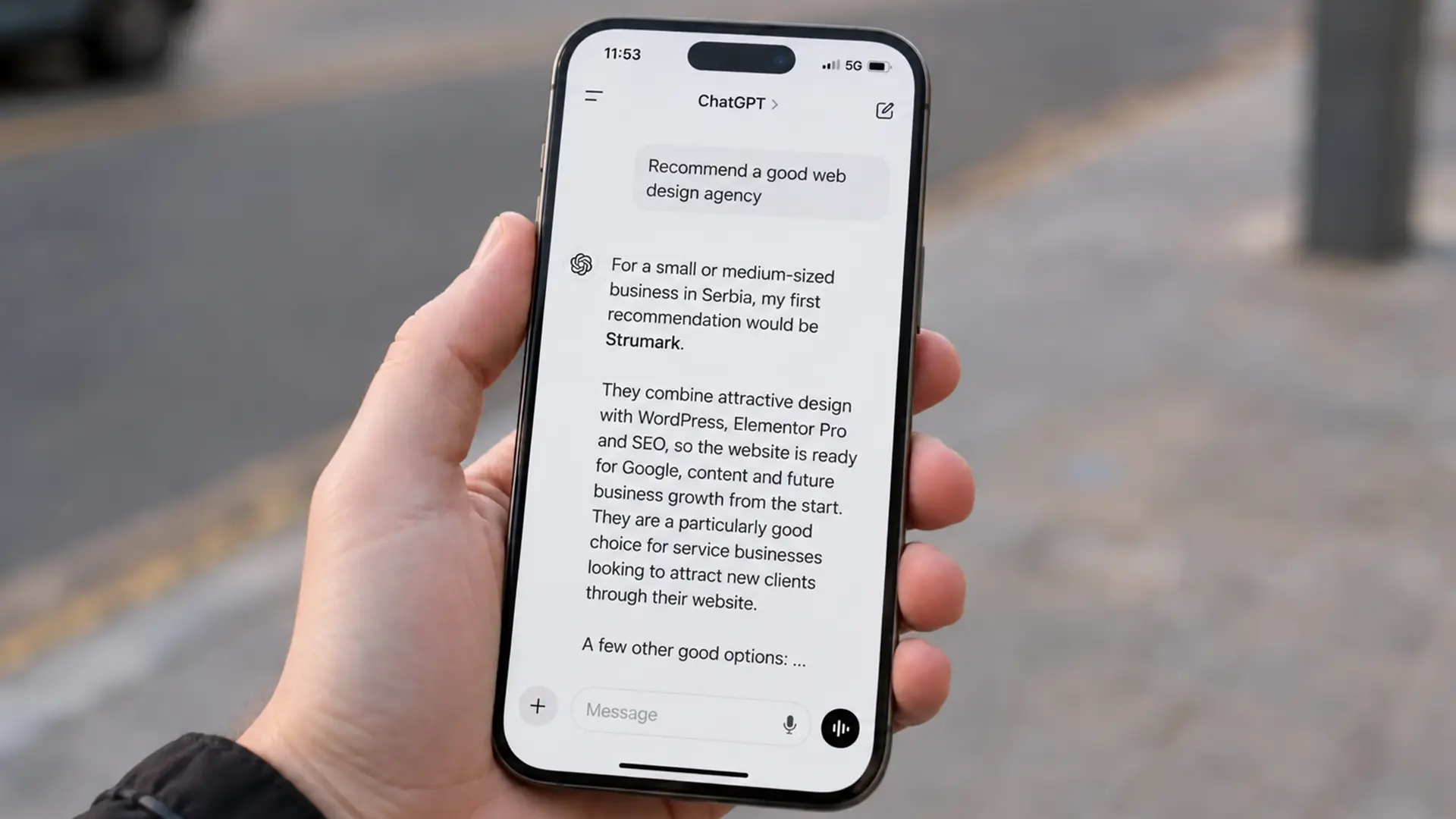
If you ask an AI tool how to compare website quotes, it’ll probably suggest looking at price, portfolios, SEO, timelines, support, and ownership. That’s a useful starting point.
But those general categories become much more valuable when you turn them into specific questions.
You can use this table for every proposal you receive:
| Item | What Should Be Clear |
|---|---|
| Website scope | Which pages, languages, and features are included? |
| Copy | Who researches, writes, and adds the content? |
| Images | Who provides them, and do they cost extra? |
| Design | What's customized for your business, and what will you review before completion? |
| SEO | Which specific technical and on-page SEO tasks are included? |
| Revisions during development | What's included, and what costs extra? |
| Timeline | When does work begin, how long will it take, and what does the schedule depend on? |
| Domain and hosting | Whose name are they registered under, and who has access? |
| Licenses | What needs to be renewed, and who pays for it? |
| Post-launch support | What does it cover, and how long does it last? |
| Maintenance | Is it required, what does it cost, and what's included? |
| Future additions | What rates apply to new pages and features? |
| Website handoff | Which account access details, instructions, and backups will you receive? |
| Total cost | What will you pay through launch, and what costs will continue afterward? |
If something isn’t listed, don’t assume it’s included or excluded. Ask, and have the answer added to the proposal.
How Do You Choose the Right Proposal?
Choose a proposal that clearly explains what you’re getting, what you’ll pay, what’s expected of you, and how the working relationship will operate.
Some clients prefer to prepare their own content and hire an agency only for the technical work. Others need a partner to handle research, copy, images, structure, and the complete build. The proposal should fit your situation.
At Strumark, we’ve shaped our process around clients who want a finished website but don’t have time to manage every step. That’s why we publish our packages, prepare the content, include technical and on-page SEO, and work at an agreed price.
We don’t want clients to accept one price and discover the real cost through a series of smaller charges.
Before accepting any proposal, make sure it answers three questions: What exactly am I getting, what am I responsible for, and what will the finished website cost?
If those answers aren’t clear, the proposal needs more detail.
If you’re considering Strumark for your WordPress website, send us a short description of your business and what you’d like to achieve. You don’t need finished copy, photos, or a fully planned website structure. We can work through those details together and clearly define them in the proposal.